
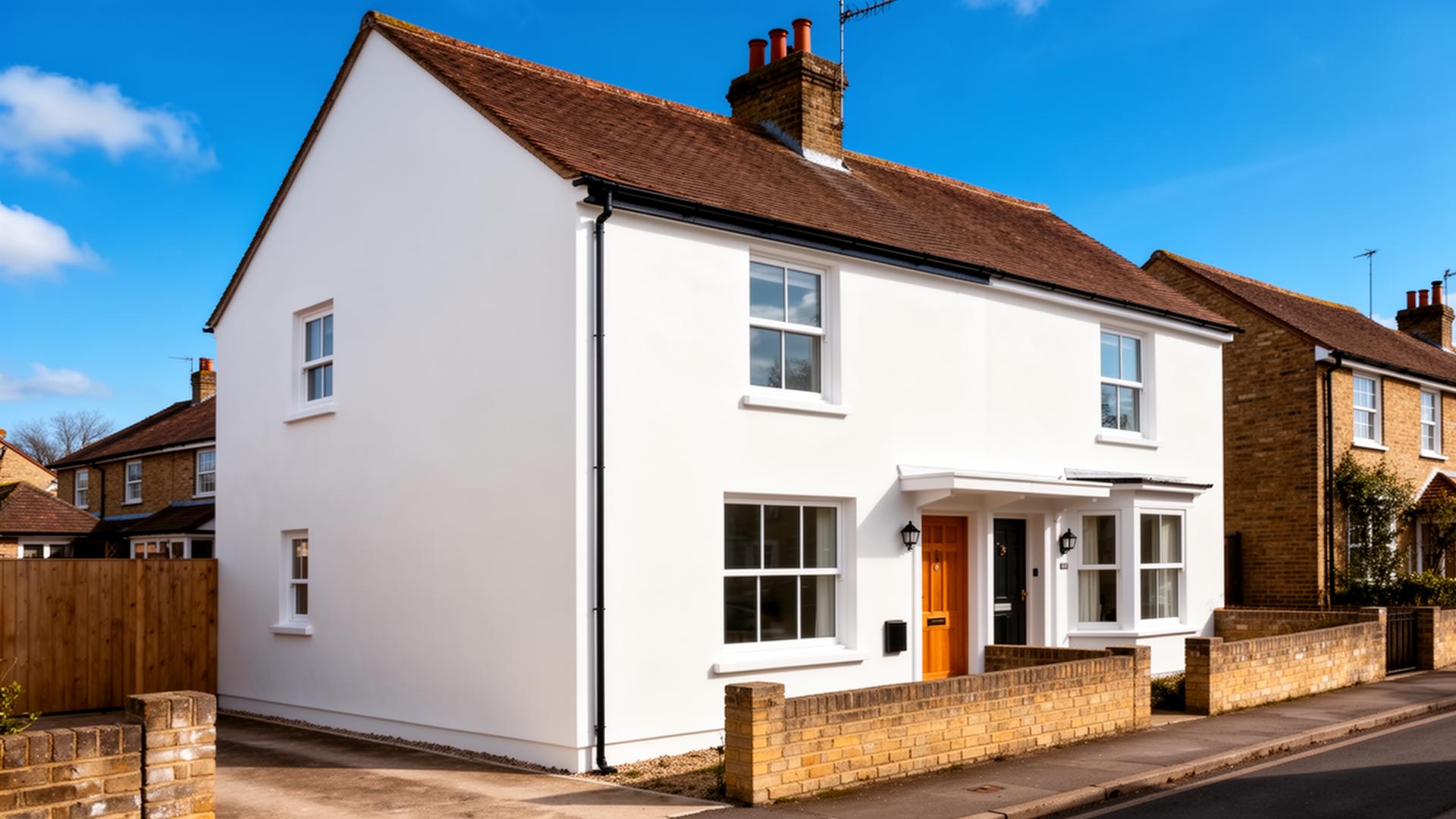
When customers in Hartlepool ask 'what render will last longest with the least maintenance', the honest answer is almost always a silicone thin-coat system on top of a sound, properly prepared base.
Why Silicone Render in Hartlepool?
Silicone is vapour-open — moisture can leave the wall — so older solid-wall properties in Hartlepool don't suffer the trapped-damp problem you get with rigid cement renders.
Local context: Hartlepool, County Durham
Coastal Victorian terraces and large postwar estates; salt-tolerant systems are vital. Direct North Sea exposure with strong easterlies — coastal silicone is the only credible long-term spec. We cover the full County Durham area from TS24 outwards, including Headland, Seaton Carew, West Park, Greatham, Hart and the wider postcodes (TS24, TS25, TS26, TS27). Most Hartlepool jobs are surveyed within 48 hours — we know the streets, parking constraints around landmarks like HMS Trincomalee, and the typical substrates we'll find on the wall.
Benefits
- Through-coloured — no painting, ever.
- Vapour-open: lets moisture out of the wall.
- Hydrophobic surface sheds rain on contact.
- Self-cleaning: rain rinses dust and pollutants off.
- Crack-resistant when applied over a properly meshed base coat.
- Resists algae and biological growth on north elevations.
Local considerations
- Choose grain size to suit the existing detailing — 1mm or 1.5mm reads cleaner on modern semis; 2mm on traditional stock.
- Dark colours absorb more heat — on south elevations they can drive thermal movement, so we usually steer customers towards mid-tones in Hartlepool.
- Plan around scaffold access for Hartlepool's tighter streets — bay windows, dormer detailing and roof junctions all need careful pricing.
- Don't render over compromised insulation. If the existing EWI boards are wet, we strip and remake before topcoat.
- Sound substrate is everything — over a failed cement scratch coat, even silicone will eventually fail.
Our process in Hartlepool
- Photo quote, then site visit to confirm — colour, grain size, and access discussed face-to-face.
- Erect scaffold with full edge protection; protect everything that isn't being rendered.
- Strip failed areas back to sound substrate. Render-bridge cracks, repair, re-prime.
- Apply adhesive base coat and fully bed glass-fibre mesh to control thermal movement.
- Apply the through-coloured silicone in the chosen finish and grain.
- Walk-round with the customer for sign-off before scaffold strikes.
Areas we cover from Hartlepool
We work across Hartlepool (TS24, TS25, TS26, TS27) and the surrounding areas:
Frequently asked questions
How long does silicone render last in Hartlepool?
Properly installed over a sound base, expect 20+ years of service before any re-coat is needed. The through-colour means you don't need a five-yearly paint cycle.
Can you silicone render over existing pebbledash in Hartlepool?
Yes — provided the pebbledash is sound and well-bonded, we apply a polymer-modified base coat with mesh, then the silicone topcoat. We test-knock the existing wall on survey to confirm.
What colours are available?
Several hundred. We bring sample tiles to the survey and offer a pre-mixed sample panel on the wall before you commit. Mid-tones perform best long-term.
Will silicone render stop damp?
It stops wind-driven rain getting in, but it isn't a damp-proof course. If you have rising damp or internal cold-bridging, those need addressing separately — we'll flag them on survey.
Do you cover all of Hartlepool and the nearby areas?
Yes — we cover Headland, Seaton Carew, West Park, Greatham, and the wider surrounding postcodes.
How disruptive is the work?
Scaffold goes up day one, render typically takes 3–7 working days depending on house size, then scaffold strikes. We work clean and protect everything that isn't getting rendered.
Get a free, no-obligation quote — most surveys booked within 48 hours.
Silicone render isn't the cheapest first-day spec, but on a 20-year view it's almost always the lowest lifetime cost in Hartlepool. Call for a free survey.