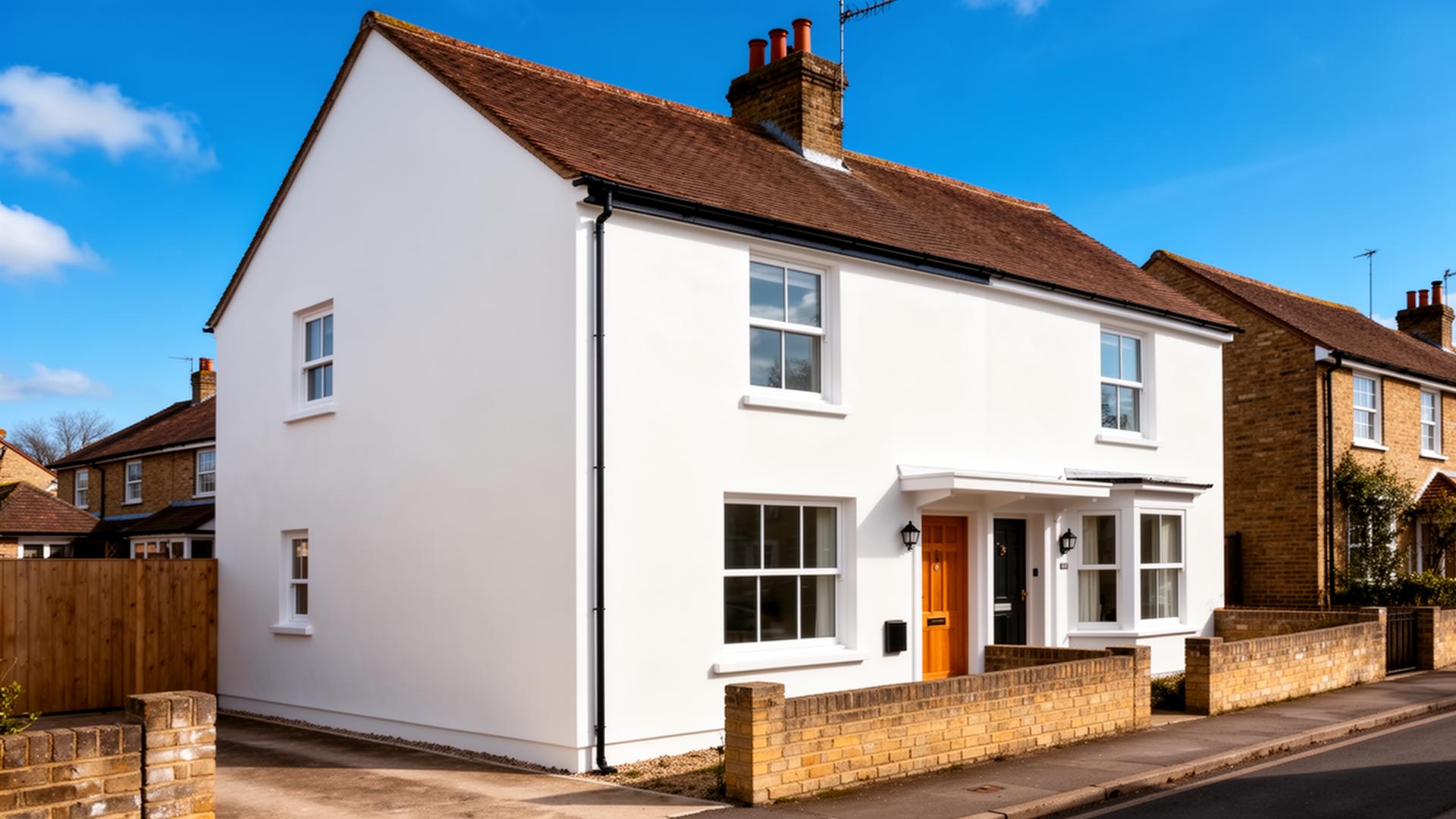
Lime render is the right answer on much of the older stock across Wakefield — period properties, listed buildings, and any solid wall that needs to breathe.
Why Lime Render in Wakefield?
Self-healing micro-cracks — lime's carbonation chemistry actually closes small cracks over time.
Local context: Wakefield, West Yorkshire
1930s semis across Sandal and Walton, with brick terraces nearer the city centre — much of the stock is now seeing first-generation render upgrades. Moderate exposure, but freeze-thaw on north and east elevations is the main long-term enemy. We cover the full West Yorkshire area from WF1 outwards, including Sandal, Walton, Lupset, Outwood, Stanley and the wider postcodes (WF1, WF2, WF3, WF4). Most Wakefield jobs are surveyed within 48 hours — we know the streets, parking constraints around landmarks like Wakefield Cathedral, and the typical substrates we'll find on the wall.
Benefits
- Flexible — handles minor movement.
- Heritage-appropriate.
- Self-healing micro-cracks.
- Compatible with traditional solid-wall construction.
- Listed-property friendly.
- Genuinely sympathetic to older fabric.
Local considerations
- Mixing modern cement and lime in the same wall is usually wrong — we don't 'half-and-half' jobs.
- Listed properties in Wakefield need heritage-officer engagement — we help liaise.
- Lime is not the right answer on modern cavity-walled or insulated modern stock — silicone or K-Rend usually wins there.
- Lime is weather-sensitive — we won't apply it in frost, rain or strong direct sun.
- Curing takes longer than modern renders — programme accordingly.
Our process in Wakefield
- Site visit + sample panel discussion.
- Strip cement render if present, gently.
- Scaffold + protect.
- Build lime render in coats with controlled drying.
- Final coat to chosen finish.
- Aftercare doc and walk-round.
Areas we cover from Wakefield
We work across Wakefield (WF1, WF2, WF3, WF4) and the surrounding areas:
Frequently asked questions
What's the difference between hot-mix and NHL lime?
Hot-mix lime is traditional putty-based; NHL is hydraulic and sets harder. We pick based on property type, exposure and heritage requirements.
Can lime render fail?
Yes — usually from being applied in the wrong weather, the wrong substrate prep, or being mixed with incompatible modern materials. Done properly it lasts a century.
Is it more expensive than modern render?
Generally slightly more, mainly due to longer curing times and skilled application. The long-term cost on the right property is much lower because cement-induced damage is avoided.
Do you handle listed-building paperwork?
We help liaise with conservation officers in Wakefield and can provide specification documents to support consent applications.
Do you cover Sandal, Walton, Lupset, Outwood?
Yes — we cover Wakefield and surrounding heritage areas.
How long does lime take to cure?
Each coat needs days to weeks to carbonate properly depending on coat thickness and weather. We plan curing into the programme.
Book a free on-site survey. We'll inspect the substrate, identify failures and recommend the right system.
We've worked on listed and conservation properties across Wakefield for years. Lime done properly, sympathetic to the fabric.